

Assess your organization’s financial readiness by calculating total occupancy costs over the next decade, comparing current rental expenses against potential mortgage payments, property taxes, insurance, and maintenance reserves. Most Canadian theatre companies spending more than $5,000 monthly on rent should check them out to explore ownership as a viable long-term investment, gaining foundational real estate insights on property evaluation and purchase strategies that apply across markets.
Identify suitable properties by examining former churches, warehouses, and commercial spaces in arts-friendly neighborhoods where zoning permits public assembly and evening performances. Focus on buildings offering 3,000 to 10,000 square feet with ceiling heights above 16 feet, adequate loading access, and existing or achievable occupancy permits for your anticipated audience capacity.
Explore financing through the Canadian Arts and Heritage Sustainability Program, regional arts councils, and community bonds that engage your existing patron base as investors. Many successful theatre acquisitions combine traditional commercial mortgages covering 60-70% of purchase price with creative fundraising campaigns, government grants, and deferred payment agreements with motivated sellers.
Build your ownership team early by engaging a real estate lawyer experienced in commercial arts properties, an accountant familiar with non-profit asset management, and a theatre consultant who understands technical requirements for performance spaces. This expertise proves essential when negotiating purchase agreements, conducting building inspections for theatrical infrastructure needs, and structuring deals that protect your organization’s artistic mission while ensuring financial sustainability.
Owning your venue transforms your company from tenant to stakeholder, creating equity, programming flexibility, and community roots that rental agreements never provide. The journey requires careful planning, but for established companies with stable programming and community support, ownership represents the ultimate investment in Canadian theatre’s future.
The Case for Ownership: Why Canadian Theatre Companies Are Making the Leap
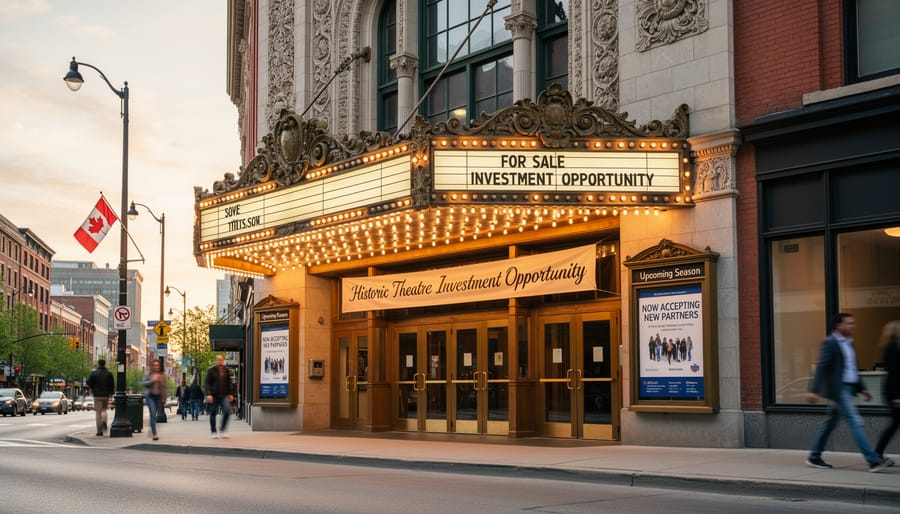
Breaking Free from Rental Restrictions
Owning your theatre venue means never again hearing “that weekend’s already booked” or facing unexpected rental increases mid-season. For Canadian theatre companies that have navigated the frustrating reality of shared spaces, ownership represents a transformative shift toward artistic freedom and operational control.
When you rent, you’re constantly working around someone else’s schedule. Perhaps you’ve experienced the disappointment of cancelling a production because your preferred dates weren’t available, or scrambling to adjust rehearsal times because another company needed the space. Ownership eliminates these conflicts entirely. Your company sets the calendar, allowing you to plan seasons strategically without competing for prime slots or working around festivals and community events that take precedence.
Financial predictability becomes another significant advantage. Rental fees can fluctuate year over year, making long-term budgeting challenging. Some rental agreements include restrictions on ticket pricing, concession sales, or ancillary revenue streams that limit your earning potential. Your own venue means keeping all box office proceeds and developing additional income opportunities like space rentals, workshops, or community partnerships.
Most importantly, ownership removes artistic limitations. No more navigating someone else’s rules about set construction, approved content, or technical modifications. Your space becomes a true creative laboratory where bold programming decisions and experimental work can flourish without external approval.
Building Equity Instead of Paying Someone Else’s Mortgage
Consider the financial reality many Canadian theatre companies face: after twenty years of renting a performance space, you’ve likely paid hundreds of thousands of dollars with nothing to show for it except receipts. Those same funds, directed toward mortgage payments on an owned venue, would have built substantial equity and created a valuable asset for your organization.
When you purchase a theatre venue, each monthly payment contributes to ownership rather than disappearing into a landlord’s pocket. Over a typical twenty-five-year mortgage period, you’re not just securing a performance space—you’re building a financial foundation that strengthens with time. Property values in Canadian urban centres have historically appreciated, meaning your venue could be worth significantly more than your purchase price by the time your mortgage matures.
This equity becomes a powerful resource for your theatre company. It can serve as collateral for future expansion loans, provide financial security during challenging seasons, or even generate revenue through strategic rental agreements with other arts organizations. Unlike rental payments that offer zero return, ownership transforms your occupancy costs into an investment that grows alongside your artistic vision, creating lasting value for your theatre community.
Creating a Permanent Cultural Hub
Owning a theatre venue transforms an organization from a transient presence into a permanent cultural anchor within its community. Rather than navigating the uncertainties of rental agreements and availability conflicts, companies with their own space can establish consistent programming schedules, invest in long-term facility improvements, and create distinctive atmospheres that reflect their artistic identity. This permanence fosters deeper audience relationships, as patrons come to associate a specific location with memorable theatrical experiences and community gatherings.
Beyond performance benefits, owned venues become cultural landmarks that contribute to neighbourhood revitalization and economic development. Companies like the Stephenville Theatre Festival demonstrate how theatre spaces can anchor regional arts ecosystems, attracting tourism and supporting local businesses. Ownership also enables organizations to diversify revenue through rentals to other arts groups, workshops, and community events, creating sustainable financial models while strengthening collaborative networks. Most importantly, a permanent venue signals institutional stability to funders, sponsors, and artists, enhancing credibility and opening doors to major grants and partnerships that prefer investing in organizations with established infrastructure rather than nomadic companies.
Understanding the Canadian Theatre Venue Market
From Heritage Theatres to Adaptive Reuse Opportunities
Canada’s theatre landscape offers remarkable diversity when it comes to acquiring performance spaces, each option bringing its own character and creative potential. Heritage theatres represent the most traditional route, with century-old venues occasionally coming to market in cities like Toronto, Montreal, and Halifax. These architectural gems often feature ornate interiors, established seating configurations, and built-in technical infrastructure, though they typically require significant investment in modernization and heritage preservation compliance.
Beyond traditional theatres, adaptive reuse opportunities present exciting possibilities for companies willing to envision transformation. Former churches have become particularly popular conversions across Canadian cities, offering soaring ceilings, excellent acoustics, and architectural drama that enhances theatrical experiences. These spaces often require less renovation than starting from scratch, as their original purpose already centered on gathering and performance.
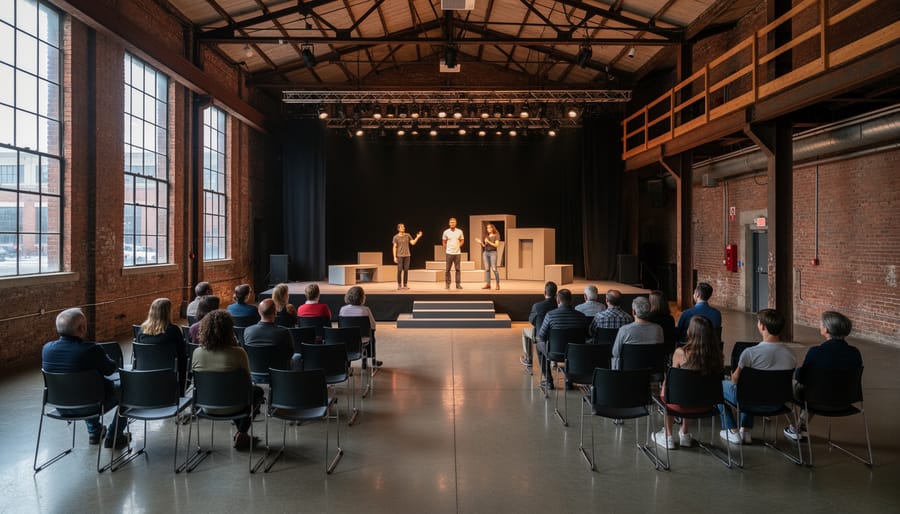
Industrial buildings, particularly warehouses in gentrifying neighborhoods, provide blank-canvas opportunities for companies seeking flexible, unconventional spaces. Cities like Vancouver, Winnipeg, and Hamilton have seen successful warehouse conversions that accommodate both traditional and experimental productions while offering room for workshops, rehearsal spaces, and community programming under one roof.
Commercial properties, including former cinemas, retail spaces, and community centers, round out the options available to theatre buyers. These properties often benefit from existing commercial zoning and accessibility features, potentially streamlining the acquisition process. Each property type presents unique advantages depending on your company’s artistic vision, budget constraints, and community engagement goals, making thorough exploration of all possibilities essential to finding your perfect theatrical home.
Regional Market Considerations Across Canada
Canada’s theatre venue market varies dramatically by region, presenting distinct opportunities and challenges depending on your location. In major metropolitan centers like Toronto, Vancouver, and Montreal, the market is highly competitive with premium pricing reflecting both property values and cultural demand. Toronto’s theatre district typically sees established venues listed between $2-5 million, though smaller black box spaces in emerging neighborhoods may start around $800,000. Vancouver’s limited real estate and geographic constraints push prices even higher, with modest performance spaces often exceeding $1.5 million. Montreal offers relatively more accessible options, with heritage buildings sometimes available for $600,000-1.2 million, though renovation costs can be substantial for older properties.
Beyond the major cities, smaller markets present compelling alternatives. Mid-sized cities like Calgary, Edmonton, and Ottawa offer better value, with functional theatre spaces ranging from $400,000-1 million. In these markets, you’ll find more negotiating room and potentially stronger community support networks. Prairie provinces and Atlantic Canada present the most affordable entry points, where adapted spaces or purpose-built venues might be acquired for $200,000-500,000. Organizations like the Saskatchewan Playwrights Centre demonstrate how smaller markets can sustain vibrant theatre communities with strategic planning and community engagement. These regions also typically offer municipal grants and development incentives that larger cities cannot match, making ownership more attainable for emerging companies willing to build outside traditional theatre hubs.
Financing Your Theatre Venue Purchase
Grants and Public Funding for Arts Infrastructure
Securing your theatre venue often extends beyond traditional mortgages, as Canada offers robust funding opportunities specifically designed to support arts infrastructure. The Canada Cultural Spaces Fund, administered through Canadian Heritage, provides substantial grants for acquiring, renovating, and constructing cultural facilities, including theatre venues. This program recognizes that cultural spaces form the backbone of community artistic life.
Provincial arts councils also offer venue-specific funding. The Ontario Arts Council, British Columbia Arts Council, and Conseil des arts et des lettres du Québec each maintain infrastructure programs supporting theatre organizations in transitioning to ownership. These grants typically require matching funds and demonstrated community impact, but can cover significant portions of acquisition costs.
Heritage building designations unlock additional opportunities. If your prospective venue holds heritage status, programs like the National Trust for Canada’s funding initiatives and provincial heritage conservation grants can offset restoration expenses while preserving architectural significance.
Municipal governments frequently support cultural infrastructure through community grants and tax incentives, particularly when theatre venues contribute to downtown revitalization or cultural district development. Many cities offer property tax relief for registered cultural organizations.
Successfully navigating these funding streams requires detailed applications demonstrating artistic programming plans, community engagement strategies, and long-term sustainability. Consider engaging grant writers familiar with cultural sector applications, as competition remains strong but opportunities substantial for well-prepared organizations.
Nonprofit Mortgages and Commercial Lending
Theatre companies operating as nonprofit organizations have access to specialized lending programs designed specifically for the charitable sector. Many Canadian financial institutions, including credit unions and mission-driven lenders, offer commercial mortgages tailored to nonprofits purchasing real estate for their artistic and community programming needs.
When evaluating nonprofit theatre companies for mortgage approval, lenders typically examine several key factors beyond traditional credit scores. They’ll review your organization’s financial statements from the past three to five years, looking for stable revenue streams from ticket sales, grants, and donations. A strong track record of grant funding from arts councils demonstrates credibility to lenders. They’ll also assess your fundraising capacity and whether you have committed capital campaign pledges toward the down payment.
Typical loan terms for nonprofit commercial mortgages range from 15 to 25 years, with down payment requirements usually between 20 and 35 percent of the purchase price. Interest rates may be slightly higher than residential mortgages but often include flexible repayment structures that accommodate the seasonal nature of theatre revenue. Some lenders familiar with the arts sector offer payment schedules aligned with your busy and quiet seasons.
Building relationships with lenders who understand the unique financial rhythms of theatre operations can make a significant difference in securing favorable terms for your venue purchase.
Capital Campaigns and Community Investment
Purchasing a theatre venue requires substantial capital, and successful acquisitions typically combine multiple fundraising approaches tailored to your community’s strengths. Capital campaigns remain the cornerstone strategy, engaging major donors through personalized asks that emphasize legacy-building opportunities. Consider creating naming rights packages for specific spaces within the venue—the lobby, rehearsal studios, or even individual seats—allowing donors to leave a lasting mark on your theatre’s home.
Community share models offer an innovative alternative, transforming audience members into stakeholders. This cooperative approach invites patrons to purchase shares in the venue, creating a sense of collective ownership that deepens audience investment both financially and emotionally. Several Canadian theatres have successfully adopted this model, building dedicated supporter bases while raising significant capital.
Patron investment programs can attract supporters seeking both cultural impact and modest financial returns. These structured arrangements differ from traditional donations by offering investors a small percentage of future revenues or other agreed-upon benefits, though legal and financial advice is essential when developing such programs.
Crowdfunding campaigns have emerged as powerful tools for theatre venue purchases, particularly when combined with compelling storytelling about your organization’s mission and community impact. Platform-based campaigns work best as supplements to larger fundraising efforts, helping you reach younger donors and theatre enthusiasts beyond your immediate geographic area. Success requires authentic engagement, regular updates, and creative reward tiers that reflect your theatre’s unique personality while mobilizing your community around this transformative goal.

The Due Diligence Process for Performance Spaces
Technical Infrastructure Assessment
A thorough technical assessment protects your investment and ensures the space can support your artistic vision. Start by evaluating the loading dock configuration and accessibility. Can your largest set pieces reach the stage efficiently? Consider door dimensions, ceiling heights in corridors, and weight capacity for freight elevators.
The fly system deserves careful examination. Determine whether you have a counterweight, hemp, or motorized system, and assess its load capacity and condition. Count available line sets and verify rigging points meet current safety standards. An outdated fly system can require significant capital investment.
Acoustic properties dramatically impact both performance quality and renovation costs. Bring in an acoustician to evaluate sound reflection, absorption, and isolation from external noise sources. Poor acoustics can limit programming options or necessitate expensive modifications.
Examine the lighting grid’s weight capacity, accessibility for maintenance, and electrical distribution. Modern productions often demand substantial power loads, so verify your electrical service capacity and panel configurations can handle current theatrical technology.
The HVAC system must balance audience comfort with acoustic concerns and backstage requirements. Older systems may struggle with energy efficiency or create disruptive noise during performances. Factor in seasonal demands specific to Canadian climates when evaluating heating capacity and operational costs.
Accessibility, Safety, and Building Code Requirements
Navigating accessibility, safety, and building code requirements is essential when purchasing a theatre venue in Canada. All public performance spaces must comply with provincial and territorial accessibility standards, which align with the spirit of the Accessible Canada Act. This includes barrier-free entrances, accessible seating areas with proper sightlines, wheelchair-accessible washrooms, and assistive listening systems. Most provinces require a minimum percentage of accessible seating, typically between 1-3% of total capacity.
Fire safety regulations are particularly stringent for assembly occupancies. Your venue must meet National Building Code requirements and provincial fire codes, including properly rated fire exits, emergency lighting, sprinkler systems, and clearly marked evacuation routes. The number and width of exits depend directly on your occupancy limit, which is determined by square footage, seating configuration, and use type.
Building code compliance extends to structural requirements, ventilation systems, acoustic treatments, and electrical capacity for stage lighting and sound equipment. Before finalizing any purchase, engage a qualified building inspector familiar with performance venue requirements to identify potential code violations. Budget adequately for necessary upgrades, as bringing older buildings to current standards can represent significant investment. Many Canadian municipalities offer technical support through their building departments to help theatre owners understand compliance requirements and navigate the approval process for renovations.
Zoning and Cultural Property Designations
Before finalizing any theatre purchase, conducting thorough due diligence on zoning and regulatory matters is essential. Municipal zoning bylaws dictate whether a property can legally operate as a performance venue, and these regulations vary significantly across Canadian cities. Some properties may be zoned for commercial entertainment use, while others require conditional use permits or rezoning applications—processes that can take months and involve community consultations.
Heritage designations present both opportunities and constraints. Many historic theatres enjoy protected status under provincial or municipal heritage legislation, which can unlock grants and tax incentives. However, these designations also impose strict renovation requirements, potentially limiting modifications to stage equipment, seating configurations, or building facades. You’ll need approval from heritage committees for any alterations.
Noise bylaws are particularly crucial for theatre operations. Evening performances, load-in activities, and outdoor events may conflict with residential noise restrictions. Understanding these limitations upfront helps prevent costly disputes with neighbors or municipal enforcement.
Working with a lawyer experienced in Canadian cultural property law ensures compliance with accessibility standards, occupancy regulations, and fire safety codes specific to assembly venues. These professionals can navigate the complex intersection of arts operations and municipal governance, protecting your investment while supporting your artistic mission.
Making the Numbers Work: Business Planning for Venue Ownership
Revenue Diversification Beyond Productions
Owning a theatre venue opens remarkable revenue opportunities beyond your own productions. Many successful Canadian theatres generate substantial income by renting their spaces to touring companies, local theatre groups, and independent producers during dark periods. This strategic scheduling maximizes your venue’s earning potential while strengthening connections within the theatre community.
Rehearsal space leasing represents another valuable revenue stream. Theatre companies constantly seek affordable, accessible spaces for rehearsals, readings, and workshops. By offering your venue during daytime hours or off-peak times, you create steady income while supporting fellow artists and building collaborative relationships.
Event hosting extends your venue’s reach beyond traditional theatre. Corporate events, film screenings, community gatherings, fundraisers, and private celebrations all require unique spaces with technical capabilities that theatres naturally provide. These bookings often command premium rates and introduce new audiences to your venue.
Ancillary revenue from bar sales, concessions, and merchandise can significantly boost your bottom line. A well-managed bar not only enhances the audience experience but often generates profits matching or exceeding ticket sales on busy nights. Consider partnerships with local breweries, wineries, or food vendors to create distinctive offerings that reflect your community’s character.
Venue partnerships with festivals, educational institutions, and arts organizations provide additional income while positioning your theatre as a cultural hub. These collaborative arrangements strengthen your venue’s reputation and create sustainable revenue models that support long-term financial stability.
Operating Cost Realities
Understanding the full scope of operating costs is essential before committing to theatre venue ownership. Beyond your initial purchase price, ongoing expenses will significantly impact your budget and sustainability.
Property taxes vary considerably across Canadian provinces and municipalities, with urban venues typically facing higher assessments. Annual taxes can range from $15,000 to $100,000+ depending on location and property size. Contact your municipal tax office early in your search to understand specific rates and any available cultural property exemptions.
Insurance premiums for theatre venues are substantial, covering property damage, liability, and equipment. Expect annual costs between $8,000 and $25,000, with premiums influenced by building age, safety features, and programming scope.
Maintenance expenses demand careful attention. Older heritage buildings may require specialized tradespeople and materials, while newer facilities need regular equipment servicing. Budget 2-4% of property value annually for routine upkeep, plus emergency reserves for unexpected repairs.
Utilities including heating, cooling, and electricity can easily reach $3,000-$8,000 monthly, particularly during production seasons. Energy-efficient upgrades may qualify for government rebates that offset initial costs.
Staffing represents your largest ongoing expense. Even modest venues require technical directors, box office personnel, and facilities managers. Many Canadian theatre companies balance this through strategic partnerships, shared positions, or volunteer programs that strengthen community engagement while managing costs effectively.
Learning from Success Stories: Canadian Companies Who Own Their Spaces
Across Canada, several theatre companies have taken the bold step of purchasing their own venues, transforming their organizations and strengthening their communities in the process. These success stories offer valuable insights for companies considering ownership.
Young People’s Theatre in Toronto stands as an inspiring example of long-term venue ownership. After acquiring their custom-built space in 1977, they’ve created a dedicated home for young audiences that has become a landmark in Canadian theatre for youth. Their ownership allowed them to design spaces specifically for their programming needs, including accessible seating and adaptable performance areas. The stability of ownership has enabled them to build a loyal audience base and develop innovative programming without the uncertainty of lease renewals.
On the West Coast, Presentation House Theatre in North Vancouver successfully navigated the transition to ownership by partnering with their municipality. This collaborative approach reduced financial barriers while maintaining artistic independence. Their experience demonstrates how creative partnerships with government bodies can make ownership achievable, particularly for mid-sized companies. The theatre has reported that ownership significantly reduced their annual operating costs, allowing them to invest more resources into productions and artist development.
Meanwhile, Pat the Dog Theatre Creation in Victoria chose a different path, purchasing a smaller, flexible space that grew with their company. Their journey highlights how starting modestly can lead to sustainable ownership. They faced challenges including renovation costs and zoning requirements, but found that owning their venue gave them unprecedented creative freedom and scheduling flexibility.
These companies consistently report similar benefits: enhanced community connections, greater artistic control, and improved financial stability over time. However, they also emphasize that success required careful planning, strong community support, and realistic timelines for seeing returns on their investments.
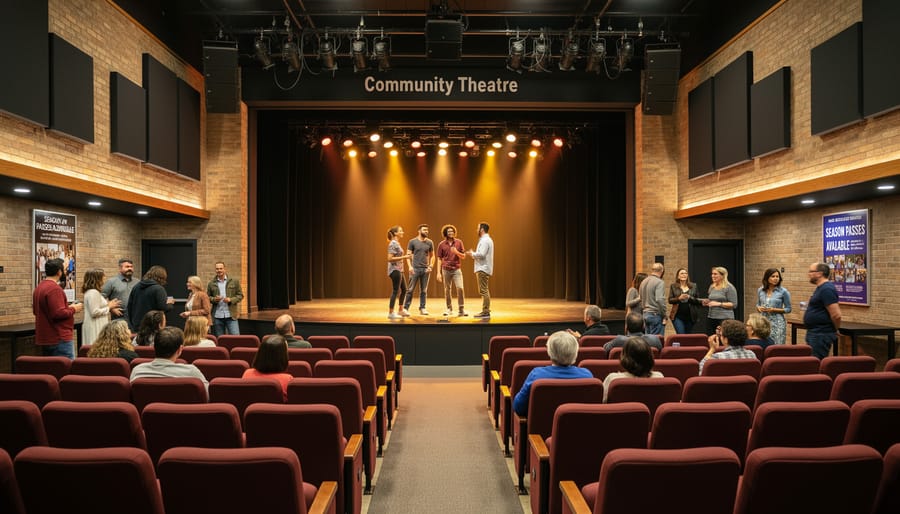
Owning a theatre venue in Canada is more than a real estate transaction—it’s an investment in the future of your artistic vision and the broader cultural landscape. While the journey requires careful planning, financial diligence, and unwavering community support, the rewards of creating a permanent home for your work can be transformative. Theatre companies across the country have demonstrated that with the right preparation, strategic partnerships, and a clear understanding of both opportunities and challenges, venue ownership is an achievable goal.
The path forward begins with thorough research and honest assessment of your organization’s readiness. Take time to build relationships with potential investors, government arts funding bodies, and community stakeholders who share your vision. Don’t hesitate to learn from those who have walked this path before you. The Pearl Company connects theatre professionals with valuable insights and resources, including access to networks of venue owners who understand the unique considerations of the Canadian theatre landscape.
Remember that every major theatre venue in Canada started with someone willing to imagine possibility beyond the status quo. Whether you’re establishing an intimate black box space or transforming a heritage building into a cultural hub, your commitment to creating a lasting home for Canadian theatre contributes to the vitality of our national arts ecosystem. With thoughtful planning, community engagement, and determination, you can build a space where stories flourish, artists thrive, and audiences gather for generations to come.