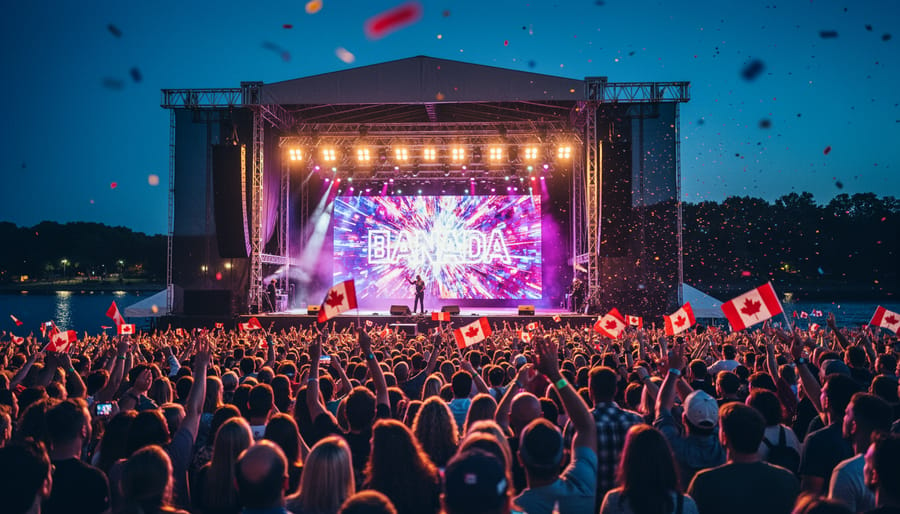
August transforms Canada into a festival powerhouse, and after covering dozens of events from coast to coast, we’ve identified OSHEAGA, MUTEK Montréal, and Boots and Hearts as the standout celebrations this month for their combination of world-class programming, accessible ticketing, and immersive cultural experiences. Whether you’re drawn to electronic music innovation, roots country traditions, or avant-garde digital arts, Canada’s August festival calendar delivers exceptional experiences that rival the renowned Québec City summer festivals earlier in the season.
This August presents a rare alignment of major music festivals, cultural celebrations, and performing arts gatherings across provinces. We’ve attended and evaluated each type of event to understand what makes them exceptional: OSHEAGA at Parc Jean-Drapeau brings triple-digit headliners and cutting-edge production values; MUTEK Montréal in the Quartier des spectacles pushes electronic music and digital creativity into genuinely experimental territory; and Boots and Hearts at Burl’s Creek Event Grounds creates Canada’s largest country music weekend. Beyond these anchors, festivals like Japan Festival Canada in Mississauga and the Sunshine Coast Festival of the Written Arts (August 13-16) prove that August’s appeal extends far beyond music into theatre, literature, and cross-cultural exchange.
The practical advantage of August festivals is timing. Summer weather peaks, outdoor venues reach full capacity without the unpredictability of June storms, and programming teams have refined their operations through earlier-season events. For theatre professionals and cultural enthusiasts, this month bridges mainstream entertainment with niche performing arts in ways that February’s indoor season simply cannot match.
Our Top August Festival Picks
After exploring festivals across the country, including our top Québec City picks we’ve identified the standout August experiences that deliver the most value for different audiences. OSHEAGA (July 31-August 2 in Montreal) remains our top recommendation for music lovers seeking world-class lineups and festival atmosphere. Theatre professionals should prioritize the Vancouver and Edmonton Fringe festivals, which showcase the breadth of Canadian theatrical innovation and offer unmatched networking opportunities. Cultural enthusiasts will find Japan Festival Canada (August 14-16 in Mississauga) delivers authentic performance traditions alongside contemporary artistic exchange. For literary fans, the Sunshine Coast Festival of the Written Arts (August 13-16) offers intimate access to storytellers and narrative craft. Those interested in experimental performance and digital arts shouldn’t miss MUTEK Montréal (August 25-30). Country music fans have Boots and Hearts (August 7-9), while Halifax Pride provides vital LGBTQ performance and community celebration.
How We Chose These Festivals
We approached this selection by evaluating dozens of Canadian festivals occurring throughout August, applying rigorous criteria to identify events that deliver exceptional value to multiple audience segments. Our goal wasn’t simply to list the largest or most commercialized festivals, but to curate a balanced mix that reflects Canada’s geographic breadth and artistic diversity while serving theatre professionals, cultural explorers, and festival enthusiasts alike.
Each festival in this guide passed through our evaluation framework:
- Geographic representation spanning major cities and regions from British Columbia to Nova Scotia, ensuring readers across Canada can access featured events
- Artistic discipline diversity, with particular attention to performance arts, live theatre, music, literary arts, and cultural celebrations
- Verified 2026 dates and ticketing information, confirmed through official festival sources to provide actionable planning details
- Accessibility considerations including ticket price ranges, venue types, and accommodation for diverse mobility needs
- Professional development value for theatre practitioners, including opportunities to observe production design, performance techniques, and audience engagement strategies
- Cultural significance and community impact, prioritizing festivals that contribute meaningfully to Canada’s artistic ecosystem
We excluded festivals without confirmed 2026 dates and those lacking accessibility information. Our selection emphasizes events where performance arts take centre stage, whether through traditional theatre at Fringe festivals or innovative digital performance at MUTEK. This approach ensures theatre professionals gain cross-disciplinary inspiration while general audiences discover festivals aligned with their specific interests, from country music camping experiences to intimate literary readings.
August 2026 Festival Quick Comparison
The festivals featured in this guide span Canada’s diverse cultural landscape, from Montreal’s electronic arts scene to Edmonton’s theatrical traditions. While each celebrates different art forms, they share August’s ideal weather and the country’s commitment to accessible performance experiences. For those exploring beyond Ontario and British Columbia, Québec City music events offer additional opportunities throughout the summer season.
| Festival | Dates | Location | Type | Tickets |
|---|---|---|---|---|
| OSHEAGA | July 31-Aug 2 | Montreal, QC | Multi-genre Music | On sale now |
| Boots and Hearts | August 7-9 | Burl’s Creek, ON | Country Music | Available |
| Sunshine Coast Festival | August 13-16 | Sechelt, BC | Literary Arts | Available |
| Japan Festival Canada | August 14-16 | Mississauga, ON | Cultural | Free admission |
| MUTEK Montréal | August 25-30 | Montreal, QC | Electronic/Digital Arts | Available |
This snapshot reveals geographic clustering in Ontario and Quebec, with notable representation from British Columbia’s literary scene. The date distribution provides natural travel planning windows, with early August dominated by music festivals and late August offering electronic arts and theatre programming.
1. OSHEAGA, Montreal’s Premier Music Festival
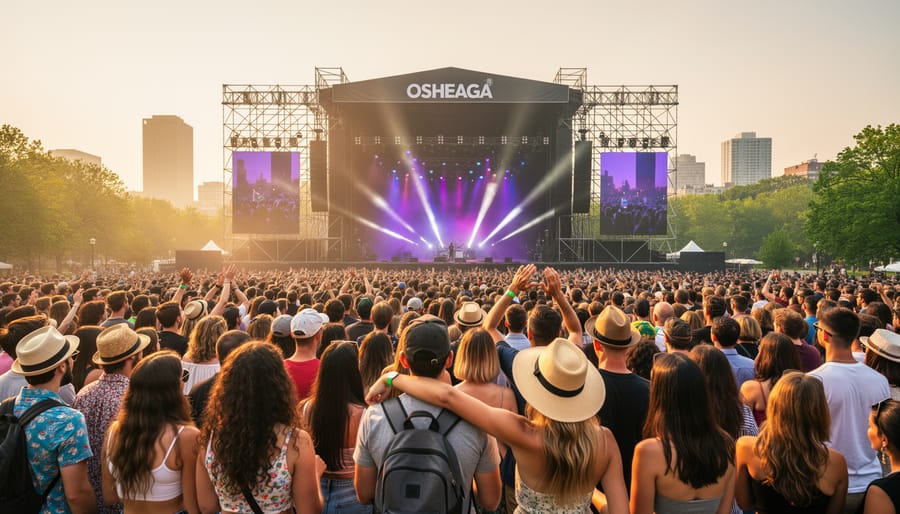
OSHEAGA anchors Montreal’s August festival calendar with three days of genre-spanning performances that pull crowds from across North America to Parc Jean-Drapeau’s island setting. Running July 31 through August 2, 2026, the festival transforms the park’s waterfront grounds into a multi-stage showcase where indie rock, hip-hop, electronic, and alternative acts share billing. We’ve attended multiple editions and consistently find the programming offers performance professionals a masterclass in stage production, audience engagement, and the mechanics of sustaining energy across marathon sets.
The festival’s strength lies in its curatorial range. Rather than committing to a single genre, OSHEAGA books established headliners alongside emerging acts, creating natural opportunities to observe how different performers command attention, build momentum, and respond to festival dynamics. For theatre practitioners, watching artists work outdoor stages in shifting light and weather conditions offers transferable lessons in adaptability and physical presence that indoor venues rarely demand.
Parc Jean-Drapeau provides natural advantages: the island location creates a contained environment that heightens the immersive experience, while Montreal’s cultural infrastructure means strong production values throughout. Sound engineering tends to be crisp even at secondary stages, and sight lines are generally well-managed despite large crowds. The city itself becomes part of the experience, with festival-goers spreading through Montreal’s neighbourhoods before and after performances.
Single-day and 3-day tickets are on sale now, giving you flexibility to either commit to the full weekend or target specific programming days. Single-day passes work well if you’re in Montreal for other August events and want concentrated exposure to the festival format without the physical demands of three consecutive days.
2. Boots and Hearts Music Festival, Country Music’s Crown Jewel
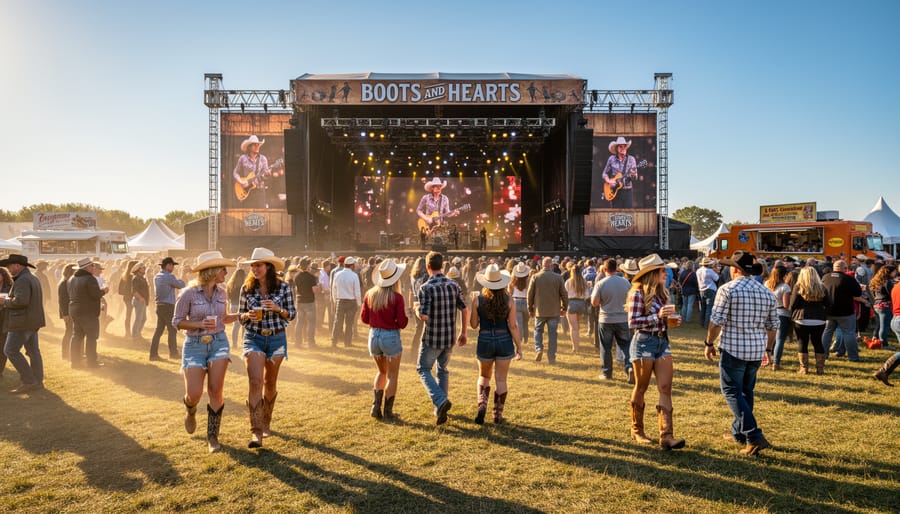
Boots and Hearts stands as Canada’s premier country music camping festival, transforming Burl’s Creek Event Grounds into a multi-day immersive experience from August 7-9, 2026. We’ve watched this festival grow into the country’s largest camping and country music celebration, and its production scale offers valuable insights for theatre professionals studying large-format outdoor performance design.
The festival’s camping integration sets it apart from typical concert experiences. Attendees don’t simply visit, they inhabit the festival grounds for the entire weekend, creating a residential performance community that blurs the line between audience and participant. This structure generates sustained energy across three days rather than the scattered engagement of single-day events.
From a production standpoint, Boots and Hearts excels at managing multiple performance spaces simultaneously while maintaining acoustic integrity across a sprawling venue. The main stage setup accommodates massive crowds without sacrificing sightlines, and the secondary stages create intimate pockets that showcase emerging artists. Theatre directors studying outdoor staging will find the festival’s approach to weather contingencies, natural acoustics, and audience flow particularly instructive.
The festival’s visual branding and atmospheric design extend beyond signage into fully realized environmental storytelling. Country aesthetic elements, from stage design to campground decor, create a cohesive world that supports the musical programming. This total design philosophy mirrors immersive theatre principles, where every element reinforces the intended experience.
For performers interested in large-scale audience engagement, watching how headliners command festival crowds while maintaining intimacy offers practical lessons in projection, pacing, and presence that translate directly to theatrical performance.
3. Sunshine Coast Festival of the Written Arts, Literary Excellence
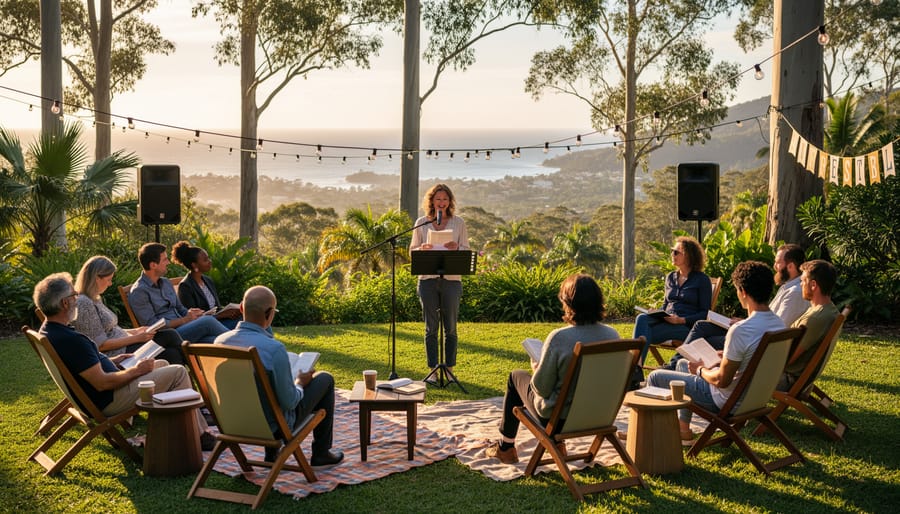
Nestled in Sechelt, British Columbia, the Sunshine Coast Festival of the Written Arts transforms this coastal community into a hub for storytelling from August 13-16, 2026. We consistently recommend this festival to theatre professionals because the craft skills overlap is substantial: character development workshops, dialogue techniques, and narrative structure sessions translate directly to dramatic writing and performance.
The festival brings together novelists, poets, playwrights, and screenwriters for four days of readings, panel discussions, and intimate conversations. What sets this event apart is the accessibility of established authors, attendees interact with writers in small group settings rather than distant auditorium presentations. For actors and directors, hearing authors discuss how they construct character motivation and emotional arcs offers fresh perspectives on script analysis and role preparation.
Past editions have featured playwright workshops exploring the transition from page to stage, examining how written dialogue becomes embodied performance. The storytelling sessions, where writers read their work aloud, demonstrate vocal pacing, emphasis, and the performative aspects of narrative delivery, techniques every stage performer refines throughout their career.
The venue’s intimate scale (most events accommodate 100-200 people) creates networking opportunities across disciplines. Theatre professionals connect with screenwriters exploring adaptation rights, playwrights developing new work, and literary agents who occasionally represent dramatic works. The coastal setting provides a contemplative environment conducive to creative development, with many sessions held outdoors overlooking the water.
The festival attracts a curious, engaged audience that values craft over celebrity, making it ideal for artists seeking substantive artistic exchange rather than commercial spectacle.
4. Japan Festival Canada, Cultural Celebration in Mississauga
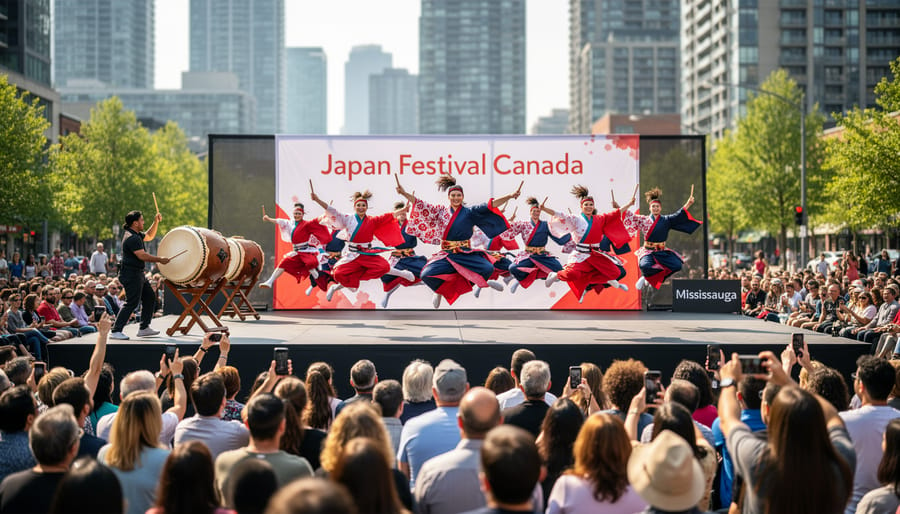
Japan Festival Canada transforms Mississauga Celebration Square into a vibrant showcase of Japanese performing arts each August, drawing thousands to experience both centuries-old traditions and cutting-edge contemporary performance. Running August 14-16, 2026 at 300 City Centre Drive, this free festival offers theatre professionals a rare concentrated exposure to performance styles that blend ritual precision with emotional storytelling.
The festival’s performance lineup typically spans traditional taiko drumming ensembles, classical Japanese dance demonstrations, and modern J-pop acts, creating a living timeline of Japanese performance evolution. We’ve found the taiko performances particularly compelling for their physicality and group choreography, the drummers’ synchronized movements and stamina offer lessons in ensemble discipline that translate directly to theatrical settings. The precision required mirrors the rehearsal rigor of any strong theatre company.
Cultural exchange sits at the festival’s heart. Japanese-Canadian artists frequently present hybrid works that merge Western theatrical conventions with Eastern performance aesthetics, demonstrating how immigrant artists navigate and blend traditions. For companies exploring multicultural programming or international collaborations, these performances provide concrete examples of successful cross-cultural adaptation.
Beyond the main stage, workshops often cover Japanese storytelling techniques, mask work derived from Noh theatre, and movement principles from Butoh. These hands-on sessions give performers tangible skills to incorporate into their practice. The festival’s integration into Canada’s multicultural landscape illustrates how traditional performance forms remain vital when communities create accessible platforms for cultural expression, making it particularly relevant for theatre professionals interested in community-engaged work and diverse performance vocabularies.
5. MUTEK Montréal, Electronic Arts and Digital Performance

MUTEK Montréal stands apart from traditional music festivals, carving out a distinct space where electronic soundscapes collide with cutting-edge visual projection, immersive installations, and experimental performance technologies. Running August 25-30, 2026 in the Quartier des spectacles, this six-day event transforms Montreal’s downtown cultural district into a living laboratory for digital creativity and sonic exploration.
For theatre professionals, MUTEK offers a masterclass in sensory storytelling beyond narrative structures. We witnessed how the festival’s audiovisual performances blur boundaries between concert, installation, and theatrical experience, using spatial sound design, reactive lighting systems, and real-time visual manipulation to create environments where audiences become participants rather than passive observers. This approach directly translates to contemporary theatrical practice, particularly for directors and designers exploring how technology can amplify emotional resonance without overwhelming the human element at the core of performance.
The festival’s daytime programming includes workshops and talks on interactive technologies, generative art systems, and spatial audio techniques that theatre practitioners can adapt for live productions. Previous years have featured explorations of motion capture for live performance, architectural projection mapping, and AI-driven visual systems, all tools increasingly relevant to experimental theatre companies pushing technical boundaries.
MUTEK’s commitment to emerging artists and risk-taking curation creates an environment where failure is possibility rather than liability. The festival’s late-night showcases in unconventional venues demonstrate how non-traditional spaces can reshape audience relationships with performance. While the electronic music foundation might seem distant from theatrical concerns, the festival’s investigation of presence, atmosphere, and technological mediation speaks directly to questions facing contemporary performance makers working at the intersection of digital and physical worlds.
6. Vancouver International Fringe Festival, Theatre Takes Centre Stage
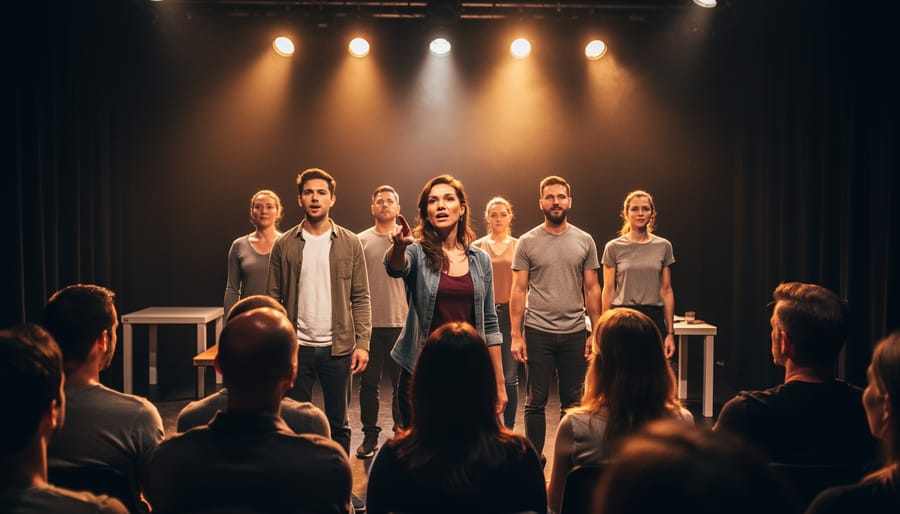
The Vancouver International Fringe Festival delivers everything theatre professionals love about the fringe format: open-access programming, raw creative energy, and performances that push boundaries without the filter of commercial gatekeeping. We’ve attended multiple editions, and the festival’s commitment to uncurated, first-come-first-served venue selection creates an artistic democracy that consistently produces surprising discoveries alongside occasional misfires, exactly as fringe should work.
Running annually in September (not August, but worth noting for festival planning), Vancouver’s Fringe transforms the historic Granville Island and nearby venues into a theatrical playground. Over 700 performances across roughly 90 productions pack into eleven days, with companies ranging from seasoned professionals testing new work to first-time creators mounting their debut shows. The accessibility model matters: no jury, no artistic director choosing what deserves a stage. If you can pay the modest registration fee, you get a slot.
For emerging artists, this festival offers invaluable exposure without the rejection letters that plague curated venues. We’ve watched unknown performers build audiences show-by-show through word-of-mouth and the festival’s bring-your-own-venue approach, which includes everything from traditional black box theatres to repurposed spaces that force creative staging solutions. The pay-what-you-can previews and affordable ticket model (typically $8-14) remove financial barriers for both creators and audiences.
Theatre professionals gain inspiration from the sheer variety, physical theatre, solo shows, experimental works, and traditional storytelling all coexist. The festival’s relaxed atmosphere encourages networking, with artists and industry professionals mingling at venue bars and outdoor spaces between performances.
7. Edmonton International Fringe Festival, World’s Largest Fringe
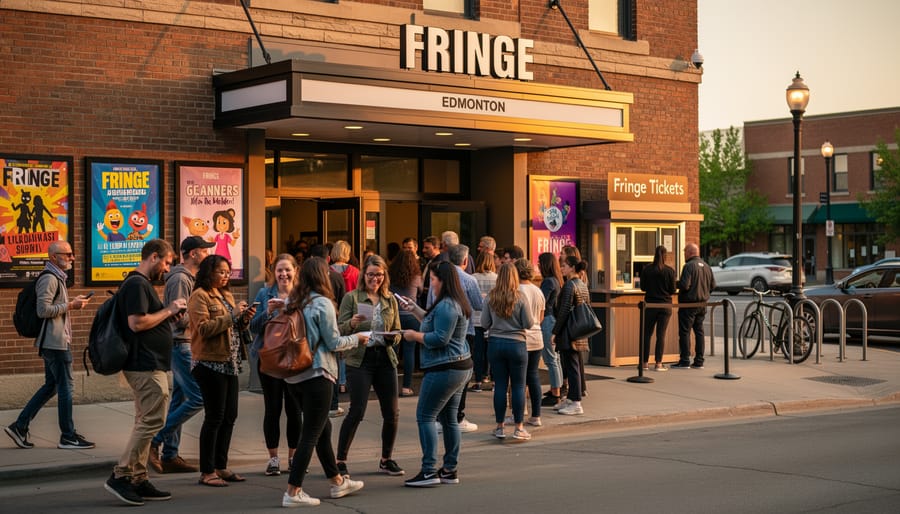
Running for twelve exhilarating days from mid to late August, the Edmonton International Fringe Festival commands the Old Strathcona neighbourhood with over 1,600 performances across more than 50 indoor and outdoor venues. We’ve witnessed this theatrical phenomenon transform entire city blocks into a pedestrian-only celebration of uncurated performance art, where anyone can mount a show without audition panels or selection committees standing in their way.
The scale genuinely stuns first-time attendees. More than 200 companies from across Canada and internationally descend on Edmonton each August, presenting everything from solo storytelling to full-scale musicals, experimental movement pieces to political satire. Unlike juried festivals, the Fringe operates on a lottery system that gives emerging artists the same shot as established companies, creating an unpredictable, democratic theatrical landscape we’ve rarely encountered elsewhere.
For theatre professionals, Edmonton represents an essential networking crossroads. We’ve connected with producers, directors, and playwrights from Halifax to Vancouver within the festival’s compact footprint, often over post-show discussions at outdoor beer tents and vendor stalls lining Whyte Avenue. The proximity of venues means catching four or five shows in a single day becomes entirely feasible.
Tickets typically run between fifteen and twenty dollars, purchased on-site or through the festival app with same-day availability common for most performances. The festival’s revenue-sharing model means 100 percent of box office proceeds go directly to artists after venue costs, making Edmonton financially viable for touring companies building cross-country momentum before they plan Québec City stops or eastern tour legs. Accommodation books quickly, so securing lodging by early July protects against inflated rates and limited availability.
8. Halifax Pride Festival, LGBTQ Celebration and Performance
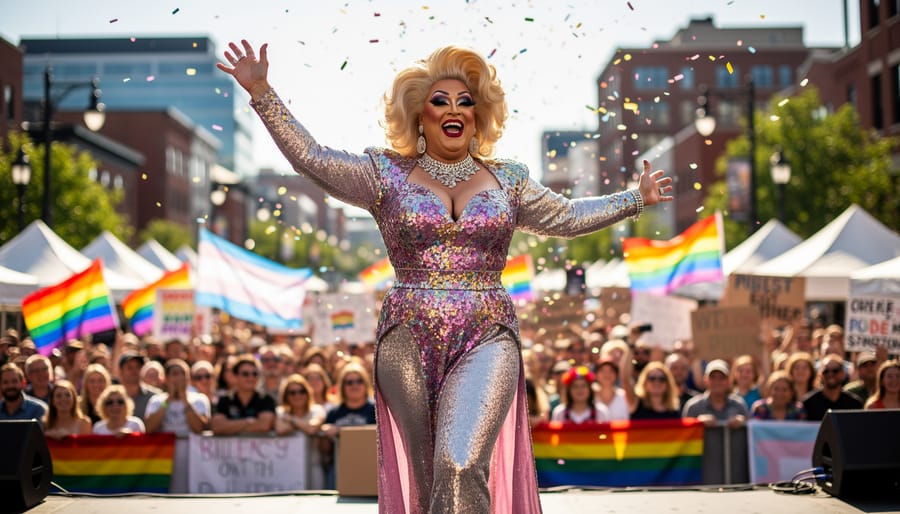
Halifax Pride Festival transforms Nova Scotia’s capital into a vibrant celebration of LGBTQ culture each August, with performance arts at its heart. We found the festival’s theatrical programming particularly compelling for theatre professionals seeking work that blends activism with artistry, performances here carry emotional weight and political urgency that distinguishes them from conventional festival fare.
The drag performance schedule stands out as both entertainment and cultural commentary. Queens and kings from across Atlantic Canada headline nightly shows that push beyond standard lip-sync routines into character-driven storytelling and sharp political satire. These performances demonstrate how drag functions as a legitimate theatrical form, combining costume design, character development, and audience engagement techniques that translate directly to traditional stage work.
Community theatre takes centre stage during Halifax Pride’s dedicated performance showcases, where local LGBTQ artists present original works ranging from one-person shows to collaborative ensemble pieces. We’ve seen these showcases serve as launching pads for emerging queer theatre-makers, providing a supportive environment where experimental work finds enthusiastic audiences. The intimacy of these venues, often repurposed community spaces rather than traditional theatres, creates immediate connection between performers and spectators.
Street performances and pop-up theatrical interventions throughout the festival demonstrate how queer performance challenges conventional staging. Flash mob performances, impromptu drag appearances in public squares, and activist street theatre blur boundaries between protest and performance, offering theatre professionals fresh perspectives on audience engagement and site-specific work.
The festival’s commitment to intersectionality ensures diverse voices within LGBTQ communities receive platform time, with dedicated programming for Two-Spirit artists, transgender performers, and queer artists of colour.
Festival Types and Traditions Explained
Canada’s August festival landscape encompasses distinct performance traditions, each with its own cultural significance and audience expectations. Understanding these categories helps festival-goers and theatre professionals navigate the diverse offerings across the country.
- Music Festivals
- Large-scale outdoor events featuring multi-genre lineups, from Canada’s premier music gatherings like OSHEAGA to specialized country celebrations. These festivals typically span 2-3 days with camping or day-pass options and attract international headliners alongside Canadian talent.
- Fringe Festivals
- Uncurated theatre festivals where any artist can perform without juried selection, originating from Edinburgh’s model. Fringe festivals democratize theatrical production through accessible venues, low ticket prices, and first-come-first-served registration for performers.
- Cultural Festivals
- Community-driven celebrations of specific cultural traditions, featuring traditional performances, contemporary interpretations, food, and workshops. These festivals emphasize cultural exchange and preservation while introducing diverse performance forms to Canadian audiences.
- Literary Festivals
- Writer-focused events centered on readings, panel discussions, workshops, and the craft of storytelling. They bridge literature and performance through spoken word, dramatic readings, and exploration of narrative techniques relevant to playwrights and directors.
- Digital Arts Festivals
- Cutting-edge showcases of electronic music, multimedia installations, and technology-driven performance. These festivals explore the intersection of digital innovation and live performance, particularly relevant for theatre makers working with projection, sound design, and immersive technologies.
Many August festivals blend these categories, creating hybrid experiences that reflect Canada’s multicultural identity and experimental spirit in the performing arts.
Planning Your August Festival Experience
Canada’s August festival circuit demands strategic planning, especially if you’re targeting multiple events across different provinces. The geographic spread, from Montreal and Toronto to Vancouver and Edmonton, means advance coordination is essential for a smooth experience.
Start by mapping your festival priorities against the calendar. With OSHEAGA running July 31-August 2, Boots and Hearts August 7-9, and MUTEK spanning August 25-30, you can realistically attend festivals in different cities without overlap. Theatre professionals should note that Fringe festivals typically run ten to twelve days, allowing you to catch performances mid-festival when word-of-mouth has identified standout shows.
- Choose festivals by priority based on your artistic interests and professional development goals
- Book tickets early, major festivals like OSHEAGA sell single-day and 3-day passes months in advance
- Arrange accommodation immediately after securing tickets; festival weekends drive up hotel rates and availability
- Plan travel logistics between cities, booking flights or VIA Rail during off-peak times to control costs
- Research programming once schedules are released to identify must-see performances and artist talks
- Network strategically by attending industry panels, post-show discussions, and informal gatherings where artists congregate
For accommodation, consider staying slightly outside festival districts where prices drop significantly, Montreal’s Plateau neighbourhood offers easy metro access to Parc Jean-Drapeau, while Edmonton’s Old Strathcona puts you walking distance from Fringe venues. Book cancellable rates when possible, since festival schedules can shift.
Theatre professionals gain most value by balancing show attendance with networking. Arrive early to venue bars where artists and producers gather, attend workshops and professional development sessions embedded in Fringe programming, and exchange contact information deliberately rather than collecting cards indiscriminately. August’s festival density creates rare opportunities to connect with colleagues from across Canada in concentrated timeframes.
Frequently Asked Questions About August Festivals in Canada
We’ve gathered the most common questions from festival-goers and theatre professionals planning their August trips across Canada. These answers will help you prepare for an unforgettable festival experience.
When do August festival tickets typically go on sale?
Most major August festivals release tickets between January and April, with early-bird pricing often available 4-6 months before the event. OSHEAGA 2026 tickets went on sale in early spring, and passes for festivals like Boots and Hearts typically follow a similar timeline.
Are festivals accessible for international visitors?
Yes, all featured August festivals welcome international attendees. Major events in Montreal, Toronto, Vancouver, and Edmonton are located near international airports with excellent public transit connections, making them highly accessible for visitors traveling from outside Canada.
What’s the weather like at outdoor August festivals?
August brings warm, pleasant conditions across most of Canada, with daytime temperatures ranging from 20-28°C (68-82°F). Pack sunscreen and light layers for cooler evenings, and bring rain gear for occasional showers, particularly at outdoor venues in coastal cities like Vancouver and Halifax.
How can theatre professionals use festivals for professional development?
Festivals offer concentrated networking opportunities, exposure to diverse performance styles, and insight into large-scale production techniques. Fringe festivals like Vancouver’s and Edmonton’s provide direct connections with emerging artists and experimental work that can inform your own creative practice.
Can I attend multiple festivals in one trip?
Absolutely. Strategic planning allows you to catch OSHEAGA in late July/early August, then travel to Boots and Hearts the following weekend, or combine mid-August literary and cultural festivals like Sunshine Coast and Japan Festival Canada with late-month events like MUTEK.
Do festivals offer single-day passes or only full weekend tickets?
Most multi-day festivals provide both options. OSHEAGA 2026 offers single-day and 3-day tickets, giving you flexibility to experience specific headliners or commit to the full festival immersion depending on your schedule and budget.
Planning your festival journey becomes easier when you explore more summer festival ideas across the country. August represents the peak of Canada’s festival season, so booking accommodation early and building in travel time between cities will maximize your experience, whether you’re attending for pure enjoyment or professional insight into performance arts.