

Broadway actors perform eight shows per week across six days, typically Tuesday through Sunday, with Monday as the standard day off. This schedule has defined professional theatre performance standards for decades and applies to most commercial productions in New York’s Theatre District and touring Broadway shows across North America.
The demanding cadence of eight shows weekly, two of which fall on both Wednesday and Saturday matinee days, creates unique physical and mental challenges that distinguish Broadway performance from other acting work. While regional theatre, summer stock, and many Canadian productions may follow lighter schedules, the Broadway eight-show week represents the industry benchmark that professional actors train for and build their careers around.
For aspiring performers, theatre students, and anyone curious about the realities of professional stage work, understanding this schedule opens a window into the discipline required at the highest level of live performance. The physical toll of singing, dancing, and projecting emotion eight times per week, often for months or years in long-running productions, demands extraordinary fitness and recovery strategies that many outside the industry don’t fully appreciate.
This article breaks down exactly what the eight-show week means for performers, how Broadway schedules work in practice, the variations you’ll find across different production types, and the fitness approaches actors use to sustain peak performance. Whether you’re considering a career in professional theatre or simply want insight into how Broadway maintains its reputation for consistent excellence, the intersection of schedule demands and performer wellness reveals much about visibility in theatre and what separates sustainable careers from burnout.
What the Broadway Performance Schedule Means for Actors
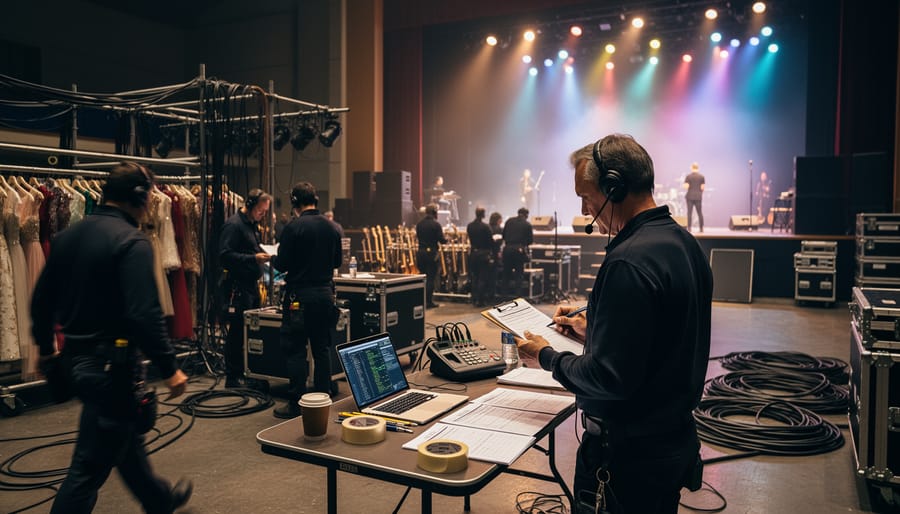
The standard Broadway performance week consists of 8 shows spread across 6 days, typically running Tuesday through Sunday. This schedule has become the bedrock of professional theatre operations in New York and has influenced performance calendars in major Canadian theatre markets as well. While audiences might assume actors perform once nightly, the reality involves a carefully structured rhythm that balances artistic demands with physical sustainability.
Broadway theatres remain dark on Mondays, meaning no performances are scheduled. This single day off gives actors essential recovery time and allows front of house staff, crew, and performers to recharge before the week begins again. The remaining six days include two-show days on Wednesday and either Saturday or Sunday (sometimes both), when actors perform both a matinee and an evening show with only a few hours between curtain calls.
- Dark Day
- A day when the theatre has no scheduled performances, typically Monday on Broadway, allowing the entire company time to rest and reset.
- Two-Show Day
- A performance day with both a matinee and evening show, most commonly Wednesday and weekend days, requiring actors to perform twice with limited recovery time between.
- Call Time
- The required arrival time before a performance when actors must be in the theatre for vocal warm-ups, makeup, and costume preparation, usually 30-60 minutes before curtain.
- Matinee
- An afternoon performance, typically starting between 2:00 and 3:00 PM, scheduled alongside evening shows on two-show days.
- Standard Week
- The traditional Broadway schedule of 8 performances across 6 days (Tuesday through Sunday), which serves as the baseline for calculating actor salaries and union contracts.
This structure emerged as the industry standard because it maximizes ticket revenue while theoretically providing sustainable working conditions. The 8-show week determines everything from union contracts to understudy schedules, and it shapes how actors approach their physical training, vocal maintenance, and overall wellness strategies throughout a show’s run.
How the Weekly Performance Schedule Works
Two-Show Days: The Greatest Physical Challenge
Two-show days compress what would normally be two full evenings’ effort into a single day, with just a few hours separating performances. On Wednesdays and Saturdays (sometimes Sundays), actors arrive for an afternoon matinee, deliver a complete performance, then return for an evening show with perhaps three to four hours in between. That window barely allows time for a meal, vocal rest, and physical recovery before repeating the entire physical and emotional output.
The cumulative strain hits hardest on the voice and musculoskeletal system. Research on vocal recovery after loading shows that singers and actors need significantly more rest time than a typical two-show break provides, yet Broadway schedules demand immediate turnaround. Dancers face similar challenges: muscles that would benefit from 24 hours of recovery instead get three, increasing injury risk from fatigue-compromised technique.
Many actors structure their entire week around protecting energy for these double days. They’ll schedule lighter workouts on Tuesday and Friday, prioritize sleep the night before, and plan minimal social commitments. The matinee-evening grind isn’t just physically taxing, it requires mental stamina to deliver the same emotional authenticity twice while running on depleted reserves. Canadian theatre professionals facing similar schedules adopt comparable strategies, treating two-show days as endurance events requiring careful preparation.
Different Types of Broadway Performance Schedules
While the standard eight-show week remains Broadway’s foundation, several factors create meaningful variations in how actors experience their performance schedules. Musical theatre performers face the most physically intensive version of this calendar, often dancing and singing through two-and-a-half-hour shows that demand cardiovascular stamina comparable to elite athletes. By contrast, actors in straight plays, while still working the same number of performances, typically encounter less physically taxing material, though the mental and emotional demands remain substantial, particularly in emotionally heavy dramas that require intense focus eight times weekly.
Holiday weeks introduce another layer of complexity to the standard schedule. During Thanksgiving, Christmas, and New Year’s periods, many Broadway productions add extra performances to capitalize on tourist traffic and local audiences with time off work. A typical holiday week might expand to nine or ten shows, compressing recovery time and testing even the most conditioned performers’ resilience. These adjustments mirror patterns in Canada’s professional regional theatres, where companies like the Stratford Festival and Shaw Festival similarly intensify schedules during peak tourist seasons, contributing to a shared Canadian theatre legacy of rigorous performance standards.
The distinction between limited runs and open-ended productions also shapes how actors approach their weekly schedules:
- Limited runs (typically 12-16 weeks) allow performers to pace themselves toward a known endpoint
- Open-ended runs require sustainable fitness routines that can be maintained for months or years
- Touring productions often perform six shows weekly with travel days replacing the traditional Monday dark day
- Canadian regional theatres frequently operate on repertory schedules, with actors alternating between multiple shows in the same week
Understudies and swings navigate perhaps the most unpredictable schedules, maintaining performance readiness while rarely knowing when they’ll actually perform. These artists might rehearse during the day and cover shows at night, creating workweeks that exceed the standard performer’s schedule while requiring equal physical preparation for roles they may perform only occasionally.
The Physical Demands: Why Fitness Is Non-Negotiable
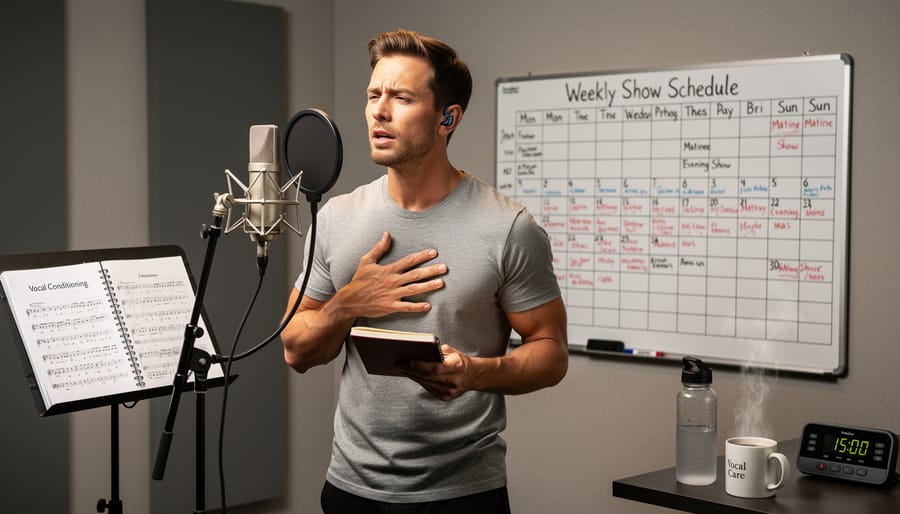
Performing eight shows weekly isn’t just a scheduling detail, it’s a physical endurance test that builds strain show after show. When you consider that most Broadway productions run between two and three hours, actors log 10 to 15 hours of performance time each week, not counting warm-ups, rehearsals for understudies, or promotional appearances. That’s equivalent to running two half-marathons weekly while memorizing lines and hitting precise choreography marks.
The cardiovascular demands alone rival competitive sports. Musical theatre performers maintain elevated heart rates throughout dance numbers, quick changes, and high-energy ensemble scenes. Add vocal stamina to the mix, and you’re asking your body to support powerful, sustained singing while your diaphragm compresses during choreography. Theatre physicians note that performers who neglect cardiovascular conditioning typically experience vocal fatigue first, because proper breath support deteriorates when your aerobic base can’t sustain the workload.
Repetitive strain is where many actors face their toughest challenges. Executing the same choreography eight times weekly means your knees absorb identical impacts, your shoulders repeat the same lifts, and your vocal cords hit the same demanding passages night after night. Unlike athletes who vary training routines, performers repeat exact movement sequences, creating overuse injury risks that strength training and targeted conditioning help prevent. Two-show days offer particularly brutal testing grounds, your body barely recovers from a matinee before the evening curtain rises.
Mental resilience becomes as crucial as physical conditioning. Pushing through fatigue while maintaining character authenticity and performance quality requires psychological stamina that fitness routines help build. Canadian theatre professionals working in Toronto’s major houses face identical demands, making athletic-level fitness preparation a professional necessity rather than a lifestyle choice.
How Broadway Actors Use Fitness to Meet Performance Demands
Adapting Fitness to Individual Roles and Bodies

A principal actor carrying a dramatic play eight shows weekly faces entirely different physical demands than an ensemble dancer performing high-energy choreography in a musical. Straight play actors prioritize vocal stamina, postural endurance for long scenes, and mental focus, while musical theatre dancers require explosive power, cardiovascular capacity, and joint mobility to execute repetitive choreography safely. Principal singers balance both worlds, vocal conditioning remains paramount, but they also need core strength and breath support for sustained singing while moving.
Contemporary theatre increasingly recognizes that fitness isn’t one-size-fits-all. Actors of all body types, ages, and abilities maintain peak fitness through personalized approaches that honor their specific roles and physical realities. A larger-bodied performer might emphasize low-impact cardio and functional strength over aesthetics, while a dancer managing chronic injury focuses on preventive exercises and targeted recovery. LGBTQ+ performers and actors from diverse backgrounds bring varied movement vocabularies and body awareness practices, yoga, Pilates, cultural dance forms, that enrich their fitness strategies. Canadian theatre professionals similarly customize their conditioning to match production demands, recognizing that sustainable performance over months requires respecting individual bodies rather than forcing conformity to narrow athletic ideals.
Frequently Asked Questions About Broadway Performance Schedules
Understanding the realities of Broadway performance schedules raises practical questions about how actors manage this demanding workweek. The answers reveal the professional structures that make consistent, high-quality performances possible while protecting performers’ wellbeing.
Do actors perform every single show in the run?
Contract actors are expected to perform all eight shows weekly unless they’re genuinely ill or injured. Missing performances without medical justification can violate union contracts and jeopardize employment, though producers understand that occasional illness is unavoidable.
How do Broadway actors take vacations?
Actors negotiate vacation time in their contracts, typically receiving one to two weeks off per year for long-running shows. These breaks are scheduled months in advance, with understudies covering all performances during the actor’s absence.
What happens when an actor gets sick?
Understudies step in immediately, often with minimal notice. Actors are required to notify the stage manager as early as possible, and the company manager coordinates the replacement, ensuring the show goes on without cancellation.
Do understudies follow the same eight-show schedule?
Understudies usually perform ensemble roles in the show, meaning they do eight performances weekly in their track. When covering a principal role, they perform that part in addition to or instead of their regular track, depending on the production’s needs.
How does the touring schedule differ from Broadway?
National tours often perform the same eight-show, six-day week but add the physical demands of constant travel. Touring actors move between cities every one to three weeks, requiring additional stamina for load-ins, technical adjustments, and living out of suitcases.
Are Canadian theatre schedules similar to Broadway’s?
Major Canadian productions in Toronto, Vancouver, and other cities typically follow the same eight-show weekly model, particularly for musicals and large-scale productions. Smaller regional theatres may run fewer performances per week, often five to seven shows depending on venue size and market demand.
These scheduling realities shape every aspect of an actor’s professional life, from how they plan personal commitments to how they structure their fitness and recovery routines. The predictability of the six-day, eight-show week allows performers to develop sustainable habits, but it also means that physical preparation isn’t optional. Canadian actors working in professional theatre face these same demands, making the fitness strategies discussed throughout this article equally relevant whether you’re performing on Broadway, at Toronto’s Princess of Wales Theatre, or in regional productions across the country.
The eight-show, six-day Broadway performance schedule isn’t just a number, it’s a framework that defines how professional theatre artists approach their bodies, voices, and overall wellness. Understanding that you’ll perform twice on certain days, often with just a few hours between shows, transforms fitness from an optional activity into career infrastructure.
Canadian theatre professionals operating under similarly demanding schedules can draw valuable lessons from Broadway’s fitness culture. Whether you’re performing at the Royal Alexandra, the Shaw Festival, or a regional theatre with comparable workloads, the principles remain constant: cardiovascular endurance sustains you through long performances, strength training protects against repetitive strain, flexibility prevents injury, and recovery protocols keep you performing at your best week after week.
Approaching your career with this level of physical preparation demonstrates the professionalism that distinguishes sustainable theatre careers from short-lived ones. Your body is your instrument, and like any instrument, it requires consistent maintenance and care.
The Pearl Company supports Canadian theatre artists at every stage of their careers by providing resources, opportunities, and community connections that honour the whole performer. Recognizing the physical and mental demands of professional theatre allows us all to build a more sustainable, inclusive industry where talent can thrive for the long term.