
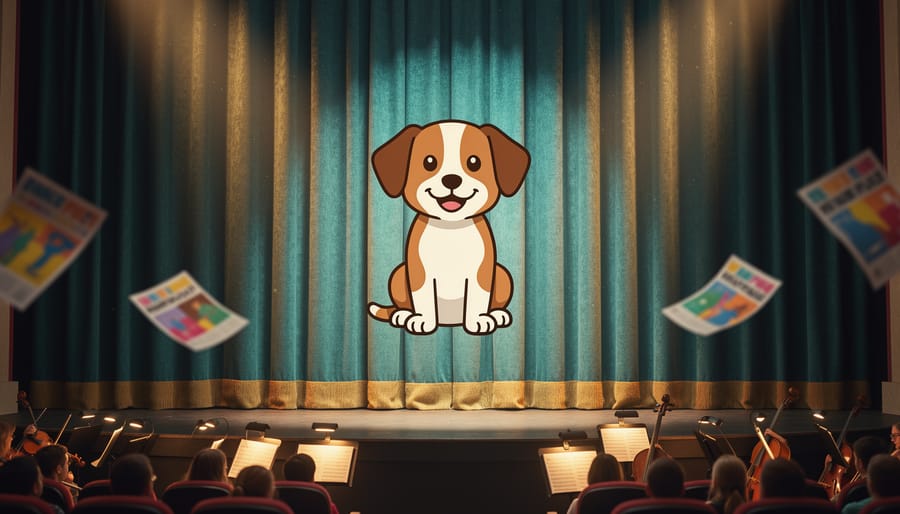
The cheerful melody that opens each episode of “Pat the Dog” has become instantly recognizable to millions of children worldwide, but many parents and theatre professionals searching for the “Pat the Dog theme song” are actually discovering something quite different: a vibrant Canadian theatre company sharing the same name. While the animated series about a protective pup and his adventures features catchy opening music composed for television, Pat the Dog Theatre Creation operates as a distinct entity in Canada’s performing arts landscape, specializing in bringing stories to life on stage for young audiences.
This common confusion presents an interesting opportunity to explore how children’s entertainment crosses media boundaries. Theatre companies adapting popular animated properties regularly face questions about music rights, audience expectations, and how to translate beloved screen characters into live performance. The original “Pat the Dog” animated series, which began airing in 2017 and continues entertaining children in 2026, features instrumental theme music that captures the show’s playful energy. Meanwhile, Canadian theatre creators have long understood that familiar songs and characters help young audiences connect with live performance, building bridges between what kids watch at home and what they experience in theatre seats.
Understanding this distinction matters for parents seeking the cartoon’s soundtrack, educators researching theatre programming for schools, and industry professionals exploring collaborations. Both the animated series and theatre companies serving young audiences share a common mission: creating joyful, accessible entertainment that resonates with children and families across Canada and beyond.
Pat the Dog: From Animation to Stage
Pat the Dog burst onto animation screens in 2017, quickly becoming a fixture in children’s programming across multiple continents. The series follows Pat, a loyal guard dog, as he protects his owner Lola from a scheming cat named Hoodie while navigating everyday suburban adventures. Its slapstick humor and dialogue-free storytelling made it universally accessible, and the catchy theme song became instantly recognizable to families worldwide.
The show’s theme music captured something essential about childhood: playful energy without words getting in the way. Its upbeat tempo and simple melodic structure meant kids could hum it after one viewing, and its wordless nature avoided language barriers that typically limit international appeal. This musical accessibility proved crucial when the series expanded into 100 countries, building a global fanbase that recognized those opening notes before the title card appeared.
The theme song’s memorable qualities included:
- A bouncing rhythm that mirrored Pat’s energetic movements and physical comedy
- Whistled melody lines that children could easily imitate
- Instrumental arrangement featuring bright, distinctive percussion
- Short, repeatable musical phrases ideal for audience participation
- Non-verbal structure allowing universal recognition across cultures
This combination of visual comedy and infectious music created natural theatrical potential. Canadian theatre artists recognized that Pat the Dog’s physical storytelling and instantly recognizable theme could translate effectively to live performance, where gesture and movement already dominate. The animated series had essentially pre-adapted itself for the stage through its wordless approach and emphasis on action over dialogue.
Pat the Dog Theatre Creation emerged from this realization, founded on the principle that familiar characters and music could lower barriers for children encountering live theatre. The company saw how the theme song functioned as an invitation, a musical handshake between screen-based entertainment and the immediacy of performers sharing physical space with young audiences.
Pat the Dog Theatre Creation: Mission and Vision
Pat the Dog Theatre Creation stands as a distinctive voice in Canadian children’s theatre, built on the belief that live performance can capture the magic of animated storytelling while creating irreplaceable shared experiences between performers and young audiences. Founded with the specific goal of translating beloved screen characters into three-dimensional theatrical worlds, the company recognizes that children arrive at the theatre already emotionally invested in characters they’ve watched at home, making that first live encounter particularly powerful.
The company’s founding principles center on accessibility and engagement. Rather than viewing animation and theatre as competing forms, Pat the Dog Theatre Creation treats them as complementary art forms that can enhance each other. This philosophy drives their approach to adaptation, where recognizable elements like the Pat the Dog theme song serve as bridges between the familiar and the new. When children hear those opening notes in a theatre, they experience both comfort and excitement, they know these characters, but they’ve never seen them move, speak, and interact in real time before.
Pat the Dog Theatre Creation primarily serves families with children aged three to eight, though their productions often include layered storytelling that keeps older siblings and parents genuinely entertained. The company understands that introducing children to theatre requires meeting them where they are developmentally. Their productions typically run shorter than standard theatrical offerings, incorporate interactive elements that channel young energy productively, and maintain pacing that matches children’s attention patterns without talking down to their intelligence.
The commitment to bringing animated storytelling to live performance manifests in every production choice. Sets evoke the visual style of animation while remaining practical for touring. Costumes capture character essence through bold colors and recognizable details rather than literal recreation. Most importantly, performers receive training in both traditional theatrical technique and the heightened physical vocabulary that brings animated characters to life convincingly.
Music functions as the company’s secret weapon for engagement. That familiar theme song becomes an invitation, a promise that what follows will honor what children love about the animated series while offering something genuinely new, the thrill of live performance unfolding right in front of them.
The Role of Music in Children’s Theatre
Musical Adaptation Strategies
When bringing an animated theme song to the stage, theatremakers face the challenge of recreating what young audiences know by heart while adapting it for live performance constraints. Pat the Dog Theatre Creation approaches this through deliberate musical choices that honor the original while embracing theatrical possibilities.
The company typically scales the original electronic orchestration down to a small ensemble, often keyboard, percussion, and one or two melodic instruments. This practical configuration keeps touring costs manageable while allowing flexibility across different venue types. Rather than attempting to replicate every synthesized layer from the screen version, arrangers focus on the melody and rhythmic elements that children recognize most strongly.
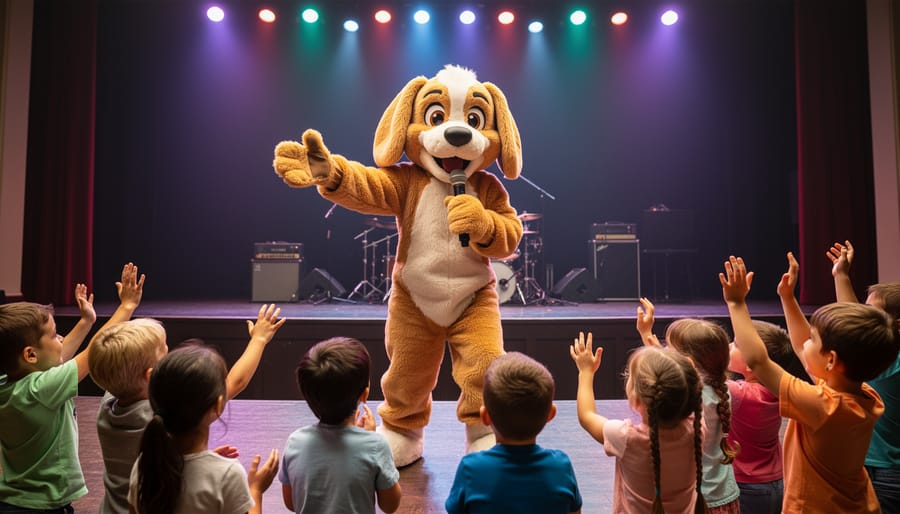
Vocal arrangements incorporate call-and-response structures that invite audience participation. The familiar chorus becomes a moment for children to sing along, transforming passive listeners into active performers. This technique serves double duty: it reinforces engagement while giving young theatregoers ownership of the performance experience.
Interactive elements extend beyond singing. Choreographed movements accompany specific musical phrases, with performers demonstrating actions that children can mirror from their seats, clapping patterns, arm movements, or simple gestures tied to story moments. These additions don’t alter the core melody but create physical connections to the music.
The adaptation process prioritizes recognition over replication. Children need to hear “their” song, but the live version gains energy from its immediacy and the performers’ visible presence that recorded music cannot match.

Engaging Young Audiences Through Familiar Melodies
When a child hears the opening notes of the Pat the Dog theme song in a theatre setting, recognition sparks instantly. That moment of “I know this!” transforms an unfamiliar dark auditorium into familiar territory. For many young audience members attending their first live performance, the cognitive comfort of a known melody acts as an emotional anchor, reducing anxiety about the new experience and opening them to engage with theatrical storytelling.
The theme song functions as a bridge between home viewing experiences and live performance. Children who have watched Pat the Dog episodes arrive with established emotional connections to the characters and music. When the theatre company reproduces that theme song, even with different instrumentation or live vocals, it validates the child’s prior knowledge and positions them as insiders rather than passive observers. This recognition gives young audience members confidence to participate vocally, clap along, or respond to prompts from performers.
Theatre practitioners working with young audiences understand that familiar music creates permission structures for participation. A four-year-old might hesitate to sing along to a completely new song, but hearing “their” theme song in a shared space signals that vocal engagement is welcome. This participatory atmosphere, initiated through recognizable melodies, establishes the foundation for children to invest emotionally in the theatrical narrative that follows, potentially sparking lifelong theatre engagement.
Pat the Dog Theatre Creation’s Place in Canadian Theatre
Pat the Dog Theatre Creation occupies a distinctive niche in Canada’s children’s and family theatre sector, bridging the gap between screen-based entertainment and live performance experiences. The company operates within a vibrant ecosystem of Canadian theatre organizations dedicated to young audiences, contributing to a national landscape where children’s theatre has evolved from simple entertainment into sophisticated artistic experiences that respect and challenge young minds.
In 2026, the Canadian children’s theatre sector is characterized by regional diversity and innovative approaches to storytelling. Pat the Dog Theatre Creation’s focus on adapting recognizable animated properties sets it apart from companies that develop original works exclusively, yet this approach serves an important purpose: introducing children to live performance through familiar characters they already trust. This gateway function complements rather than competes with the work of other children’s theatre companies across the country.
The company’s network within the Canadian theatre community includes:
- Collaborative relationships with regional performing arts centres that host touring productions
- Partnerships with educational institutions integrating theatre into early childhood curricula
- Connections to festivals celebrating children’s arts and performance across Canada
- Professional associations supporting theatre creators working in the family entertainment sector
Pat the Dog Theatre Creation’s contribution to theatrical diversity extends beyond its adaptation work. By demonstrating how beloved screen content can transition successfully to stage, the company has helped validate a model that other theatre makers have explored with different properties. This approach addresses a practical reality: many children’s first exposure to storytelling comes through television and digital media, and using that familiarity as a bridge to live theatre helps build the next generation of theatre audiences. In a country as geographically vast as Canada, where access to live performance varies dramatically by region, Pat the Dog Theatre Creation’s touring model helps extend theatrical experiences to communities that might otherwise have limited exposure to professional children’s theatre.
Resources for Connecting with Pat the Dog Theatre Creation
Connecting with Pat the Dog Theatre Creation requires navigating Canada’s diverse theatre landscape, where smaller companies often maintain presence through multiple channels rather than centralized platforms.
Theatre professionals seeking collaboration opportunities should begin with The Pearl Company’s comprehensive database of Canadian theatre companies. This resource offers verified contact information, production histories, and networking pathways that connect creators across the country. The platform’s advanced search filters allow users to identify companies working in children’s theatre, musical adaptation, and family programming, making it an essential tool for discovering partnerships aligned with your artistic vision.
Families interested in attending Pat the Dog Theatre Creation productions can monitor local performing arts centres and children’s festivals, where touring companies frequently announce their schedules. Many Canadian theatre companies maintain mailing lists that deliver performance announcements directly to subscribers, ensuring you won’t miss limited runs in your region.
For educators and community programmers, reaching out through The Pearl Company’s network facilitates conversations about educational programming, workshop opportunities, and potential residencies. Canadian theatre companies increasingly offer curriculum-aligned experiences that extend beyond traditional performance formats.
Potential sponsors and funding partners can assess Pat the Dog Theatre Creation’s mandate and past productions through industry databases, allowing informed decisions about supporting children’s theatre initiatives that strengthen Canada’s cultural infrastructure.
The Pearl Company streamlines these connections, transforming fragmented information into accessible pathways that benefit the entire Canadian theatre community.
The journey from a catchy animated theme song to a live theatre experience reveals the dynamic ways Canadian performing arts adapt and evolve. Pat the Dog Theatre Creation stands as a testament to the innovative spirit within Canada’s children’s theatre sector, transforming familiar melodies into gateways for young audiences discovering live performance for the first time.
This intersection of screen and stage demonstrates how Canadian theatre companies continue pushing boundaries while maintaining accessibility. By leveraging the comfort of recognizable music, companies like Pat the Dog Theatre Creation lower barriers to entry for families who might otherwise find theatre intimidating or unfamiliar.
The broader landscape of Canadian children’s theatre benefits from such creative approaches. Whether you’re a theatre professional seeking collaboration opportunities, a family looking for age-appropriate performances, or an educator exploring theatrical resources, platforms like The Pearl Company provide essential connections across the country’s diverse theatre ecosystem.
As Canada’s performing arts community continues expanding in 2026, the fusion of beloved media properties with live theatrical innovation ensures that new generations develop lasting relationships with theatre. The simple act of hearing a familiar theme song in a theatre setting can spark a lifelong passion for the performing arts.